Part time Semester Project
Hochschule für Gestaltung: Sustainability Course Team: Maximilian Schneider, Bar Keshet Mentors: Ursula Tischner
My Role
Research, concept, disassembly of the coffee machine and calculation of the eco index, product design
Facts
Besides our project Ursula Tischner, who was a guest lecturer at our school also taught us more about our sustainable impact and footprint we have in our everyday life.
How can we create a healthier and more sustainable way of brewing coffee?
The challenge
The project Coffreddo arose in our process and sustainability class. The task was to disassemble an object of our choice. We chose the filter coffee machine BRAUN KF22 and examined all of its parts to then calculate its eco-indicator. The goal was to design our own coffee machine reducing the eco-indicator drastically by finding out what parts or functions in the old coffee machine were not sustainable and bad for our environment.
Coffreddo
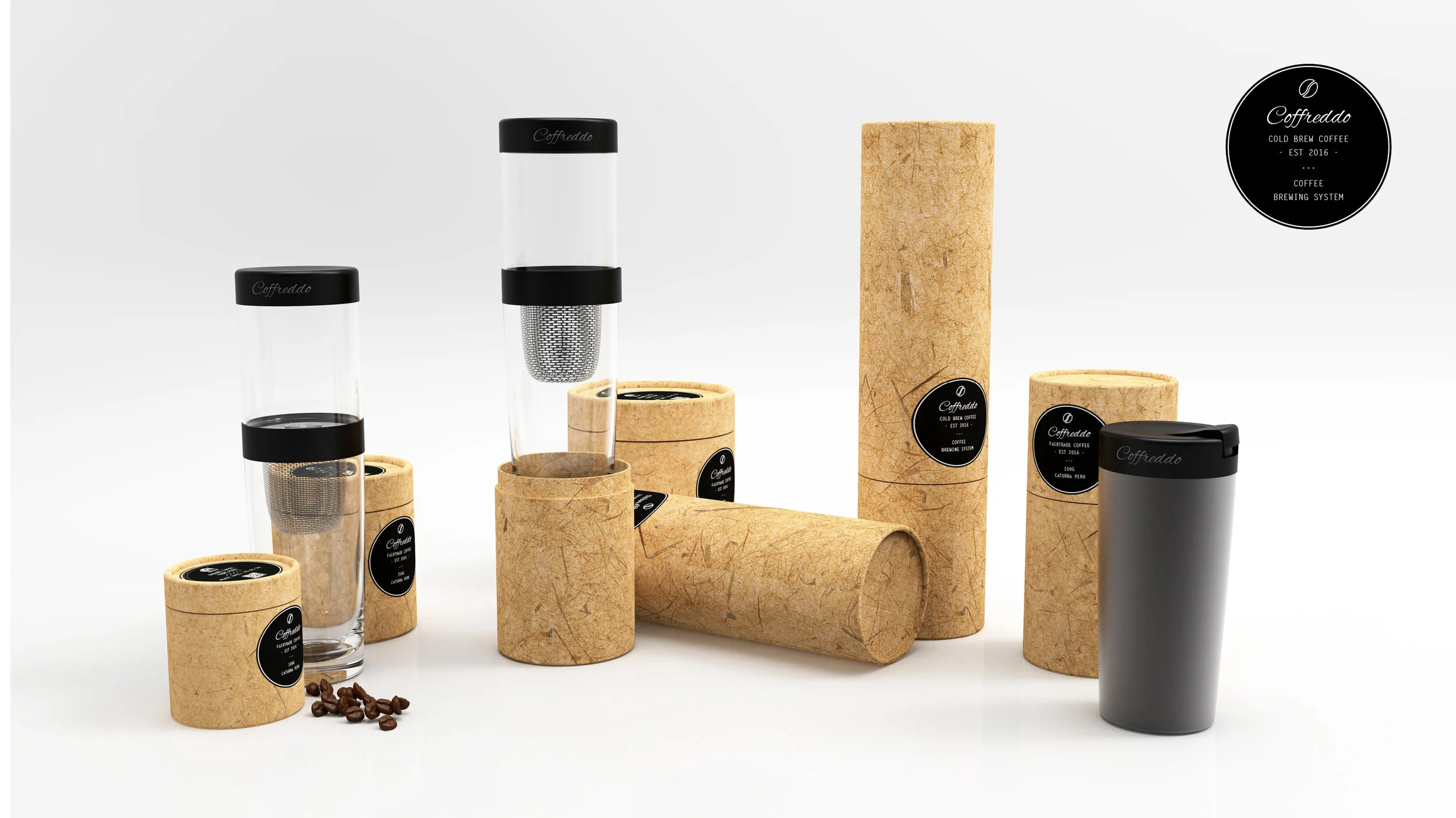
A cold brewing coffee system consisting of sustainable materials, which you can brew coffee in two different ways.
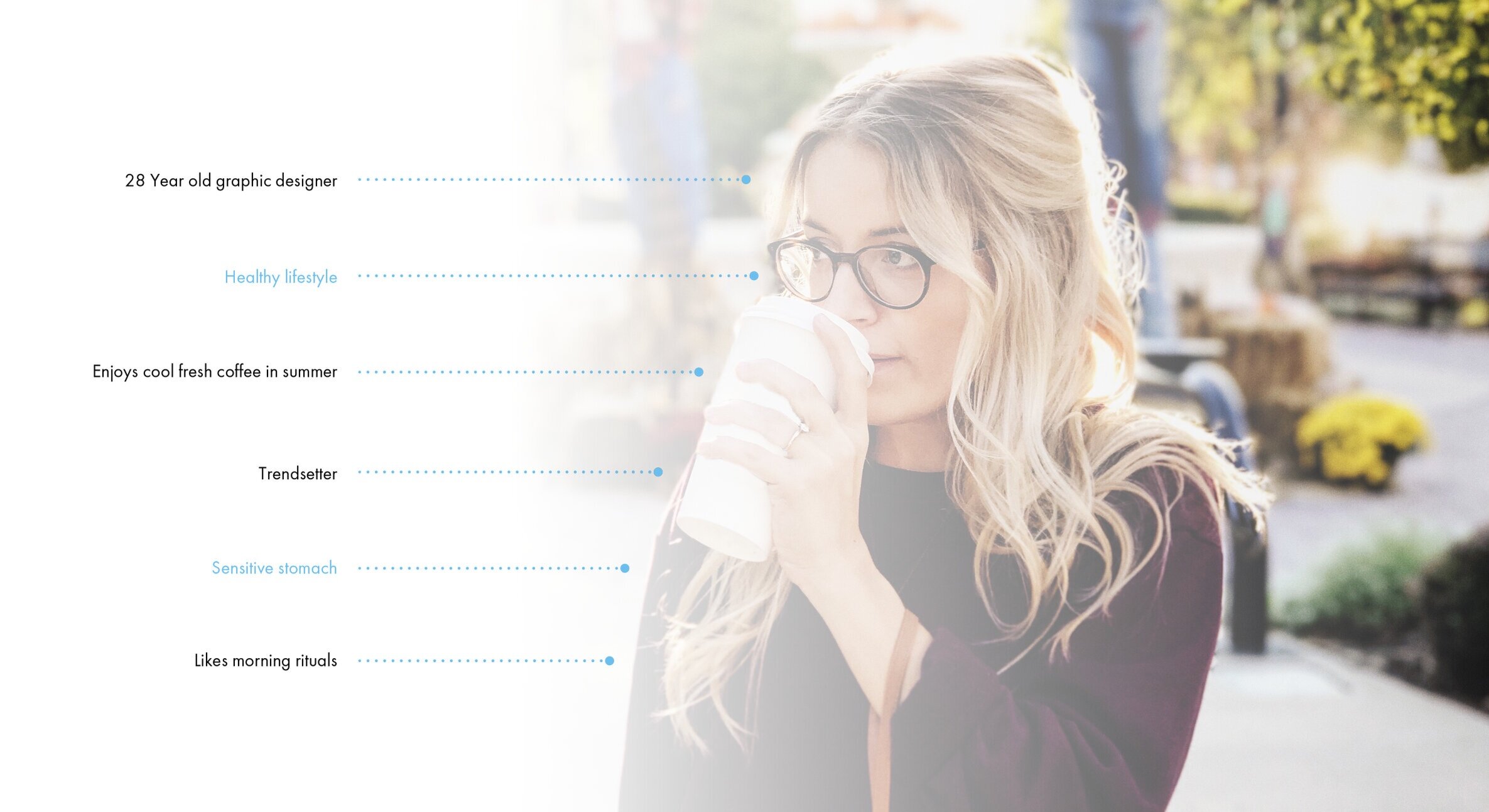
Target group
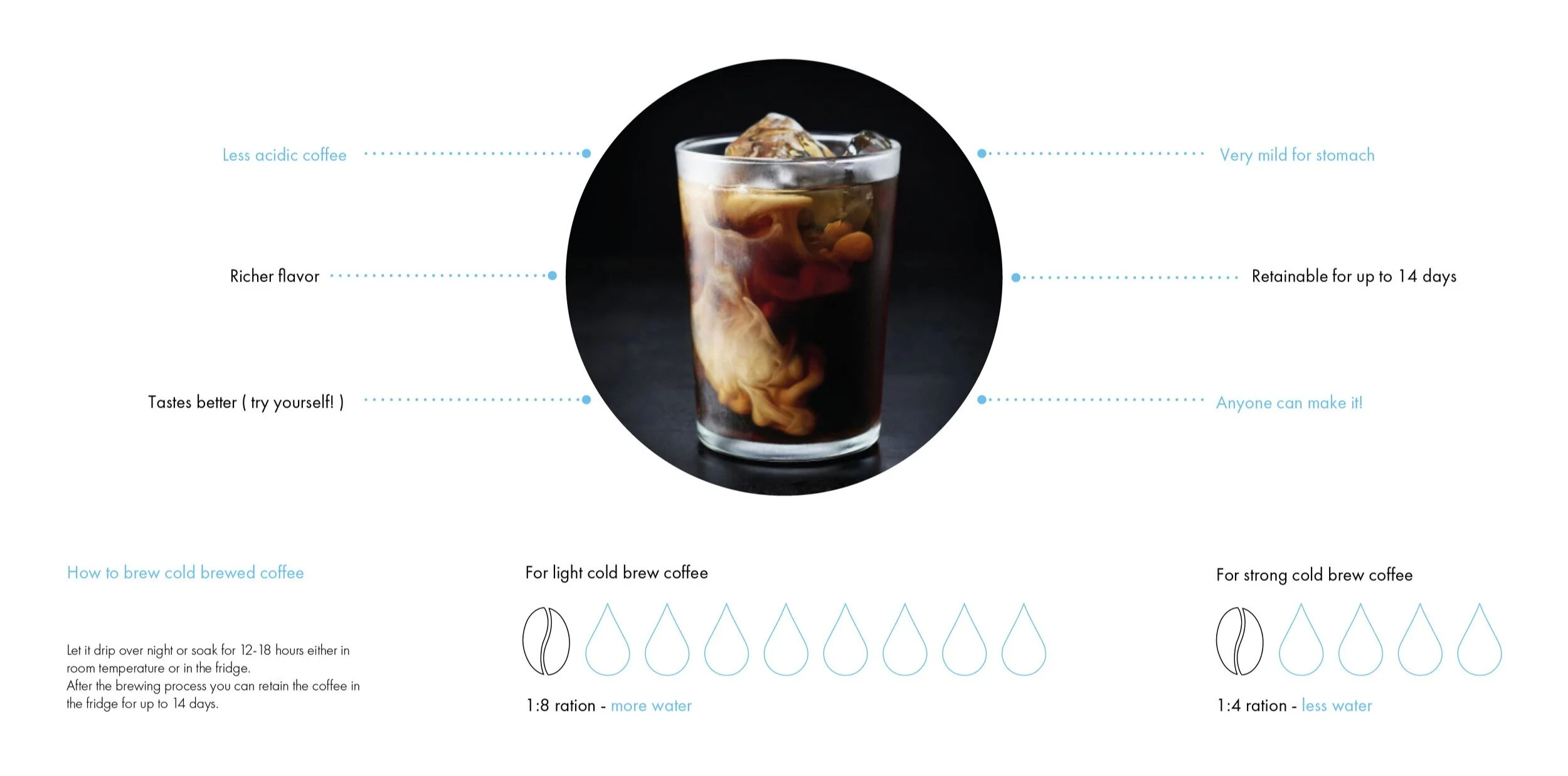
What is cold brew? And how to brew it!
Cold brewing, also called cold water extraction or cold pressing, is the process of steeping coffee grounds in water at cool temperatures for an extended period. Coarse-ground beans are soaked in water for a prolonged period of time, for 12 to 18 hours. It can be kept in the fridge for up to 14 days. Below some explanation which ration to use to brew light or strong cold brewed coffee:
Two brewing principles
There are two different ways you can brew cold brewed coffee.
Dripping
Either you use the water container which is filled with cold water and let the water drip through the filter down into the coffee container.
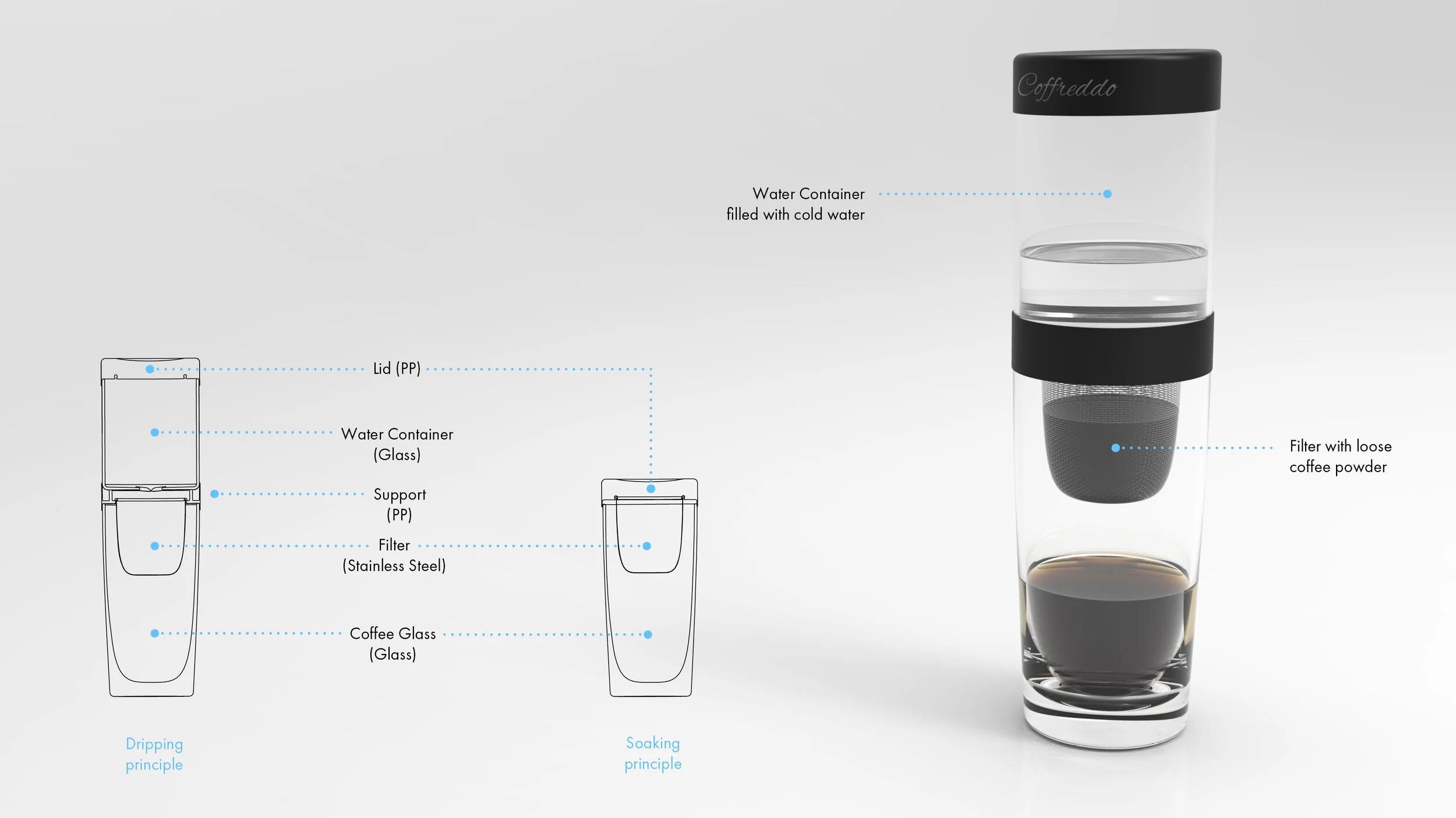
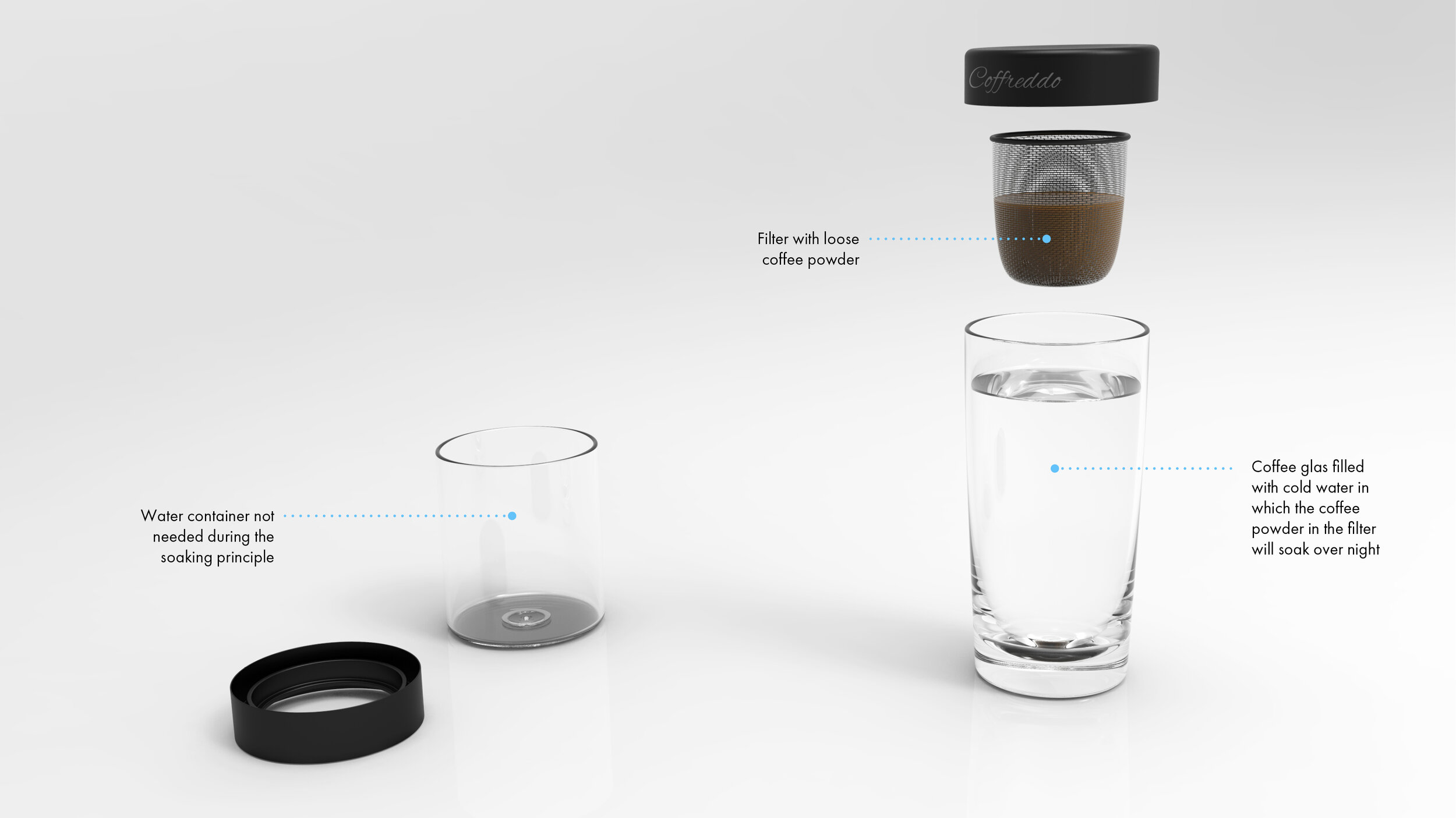
Soaking
Or you fill the coffee container/glas with water and just let the filter with the loose coffee powder soak in the water.
How did we get there…
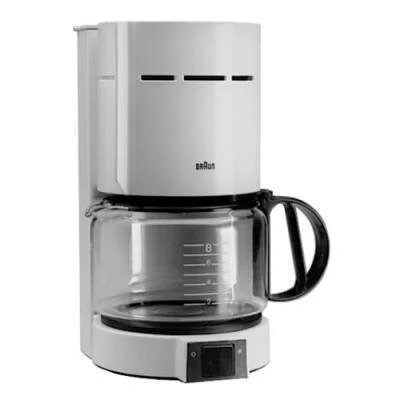
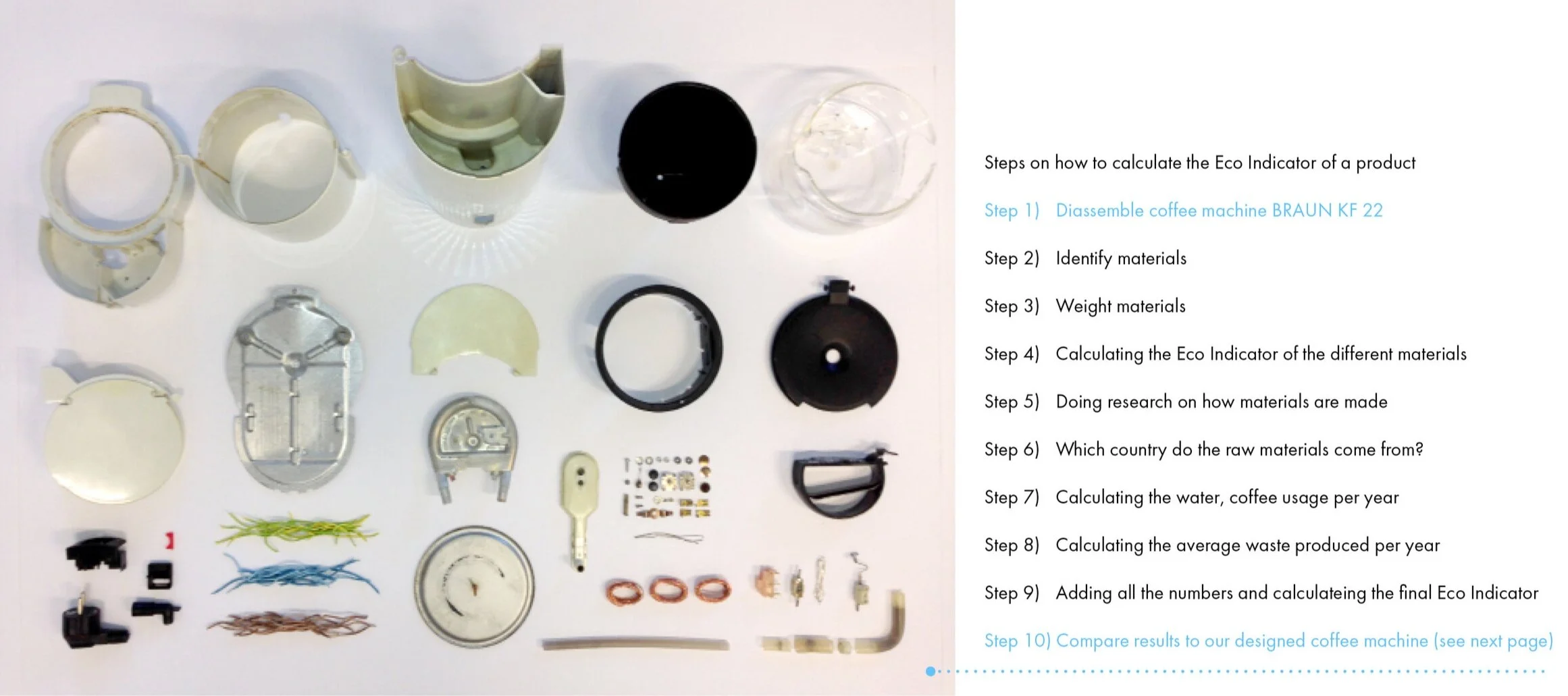
Product disassembly of Braun KF22 coffee machine
We started off with the task of disassembling a product of our choice, in our case the classic coffee machine BRAUN KF22, which we had standing around at home.
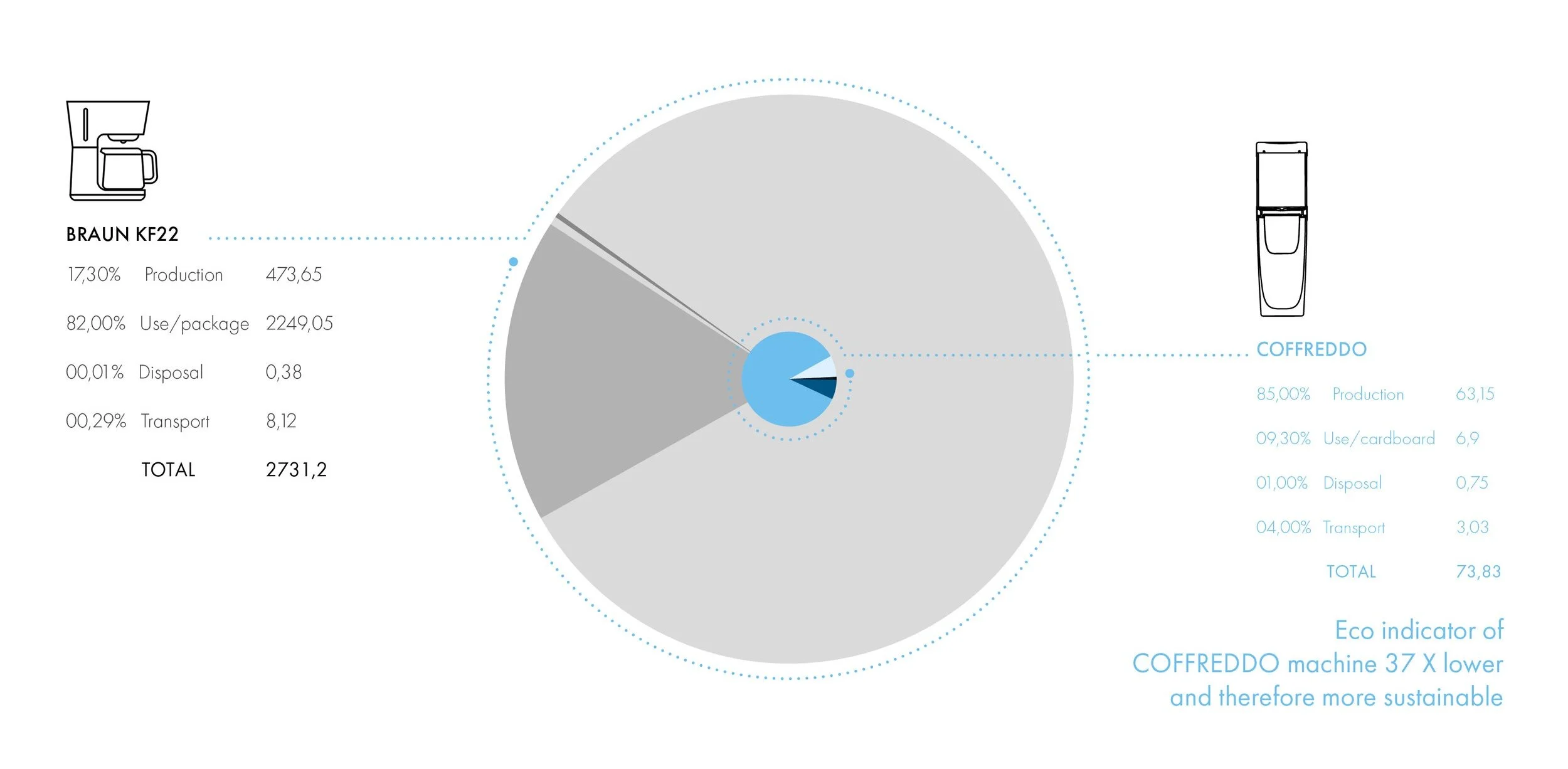
Calculation of the Eco Indicator
Afterwards we went into calculating the Eco Indicator of the product to then try and create a more sustainable coffee machine.
Below are all the steps listed on how to calculate an Eco Indicator:
The Eco Indicator comparison
If you want to try yourself for one of your products here is a PDF that I found online that helps you calculate the Eco Indicator!
More coming soon…
Personal reflection and what I have learned
This project showed me that the shell of a product can really give false impressions about how sustainable it really is. I have learned that the term sustainability is much broader and deeper than many of us assume it to be. In this specific case it was much more than just to look at the materials used but also to look at whether the materials were local or transported overseas to the production and later on assembly location. Part of this whole analysis was to take into consideration how long lasting materials or products are as well as how the overall product is assembled (e.g. if it was glued together etc.). It was shocking to see that some materials were impossible to recycle properly despite a strong will to invest some time into the disassembly.